

To develop new neighbourhoods that meet the needs and challenges of our time, urban autonomy is emerging as a key concept! Belval and Metzeschmelz embrace citizen-centred urban planning, where shopping, work, school, and other daily needs are easily accessible on foot or by bike. “All within an urban framework that is as green and sustainable as possible,” explains Zahira Malyani, Project Manager at AGORA.
How would you define the concept of urban autonomy, and why is it so important to AGORA in its Belval and Metzeschmelz districts?
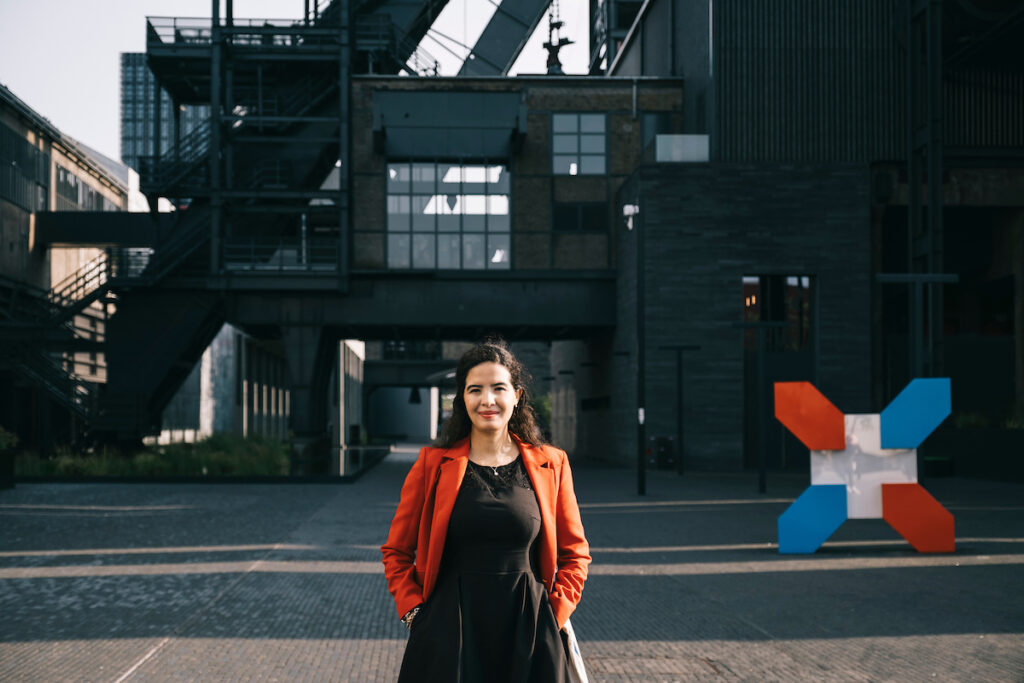
Zahira Malyani, Urban Planner and Project Manager at AGORA: “Urban autonomy is the ability of a city to manage itself without relying on too many external resources, and the ability of its inhabitants to meet their own needs within the same area, in terms of food, health, energy, finance, leisure, culture and many other needs. It means being able to get around on foot or by bike in an environment where everything is close at hand. However, urban autonomy is not just about the presence of shops or the location of public institutions in the area; it is a profoundly urban planning issue. The layout of streets, the type of buildings and the integration of public transport, for example, are key elements of urban autonomy. Urban autonomy can only be achieved through a strategy of mixed functions and uses, as well as short routes designed for pedestrians and cyclists. The idea is to build a “short-distance city,” or a “quarter-hour city,” as theorised and promoted by the Franco-Colombian urban planner Carlos Moreno (1). What this means in concrete terms for the future development of Belval and the location of the new Metzeschmelz district is the abandonment of the old logic of separation of functions, with a residential sector on one side, a purely commercial district on the other, and an industrial sector or an area reserved for schools and institutions further down the line. Urban autonomy requires exactly the opposite: all functions must coexist within the same perimeter.
Can you give a more concrete example of how Metzeschmelz will be an independent district?
Zahira Malyani: “The Metzeschmelz project is about creating a new district where we can live, work and play in the same area. There is an additional challenge: to create a harmonious and balanced neighbourhood for everyone, even though the area touches on two localities, Esch-sur-Alzette and Schifflange, which have never been united in this way by a common neighbourhood with mixed functions. Admittedly, Metzeschmelz will be made up of several sub-neighbourhoods, each with its own specific characteristics and personality, but they will all be designed according to the principle of urban autonomy. In certain rare cases, residents of a sub-neighbourhood may have to go to the neighbouring area to meet certain needs, but it is planned that they will never have to travel a distance that requires them to take their car. Each sub-neighbourhood is designed to meet a key objective: living well daily, with local shops, services, public squares, green spaces, and schools. The schools will therefore be located directly within the Metzeschmelz, to ensure that schoolchildren study in the very heart of the district, a crucial condition for the smooth running of the schools, which is also linked to the number and types of housing.”
Are there any major constraints, areas of resistance or particular challenges to achieving urban autonomy in Metzeschmelz?
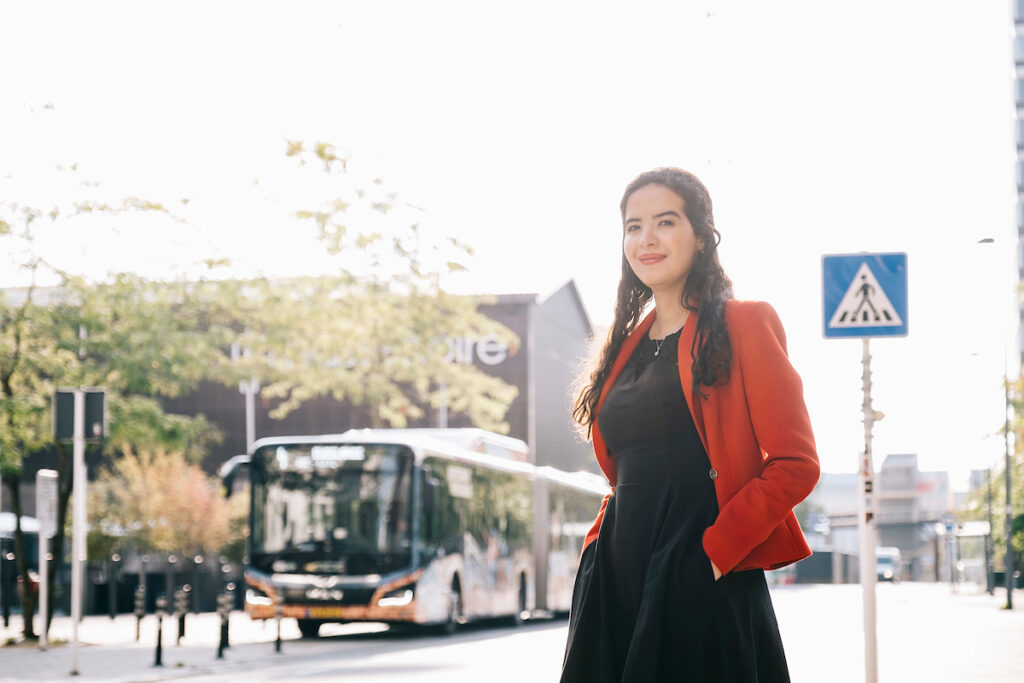
Zahira Malyani: “We’re lucky enough to be able to design and build almost everything from scratch, which really makes our lives easier! But an autonomous neighbourhood can’t just be shaped by planners working in their ivory towers. For it to work, future residents must believe in it and quickly adopt the lifestyle. At AGORA, we put residents at the heart of the project from the outset, to ensure that it meets their real needs. We know, however, that the challenge of creating a low-car-use neighbourhood is colossal, and that we will have to redouble our efforts to make this transition easier for residents. They won’t get on board if the neighbourhood doesn’t have enough safe cycle paths (including for electric scooters), enough wide pavements, or too few speed limits on the streets. Our job is to produce good urban planning, based on in-depth studies that take account of current needs and anticipate those of the future.”

And what can be done to improve the urban planning of Belval, at its now advanced stage of development, to encourage greater urban autonomy?
Zahira Malyani: “It’s true that many urban planning elements at Belval are not easily modifiable. However, there is still a lot of thinking to be done and measures to be put in place to encourage a real mix of uses for ground floors throughout the site. The urban planning programme for Belval will therefore evolve above all in terms of the use of the future buildings, which we must try to make as mixed as possible, with, for example, shops on the ground floor, offices on the first floors and finally housing on the upper floors. We also need new mobility solutions to encourage proximity and short distances at Belval. Numerous studies have shown that the average city dweller gives up the idea of combining walking and public transport when the distance to the stop on foot is more than 600 metres. The new Belval mobility plan therefore provides for a maximum distance of 400 metres between each bus or tram stop, spread evenly across the area.”

Urban autonomy is also designed to encourage the most eco-responsible neighbourhood possible and to incorporate circular economy principles?
Zahira Malyani: “Absolutely. In an autonomous neighbourhood, there are fewer motor vehicles on the road, which is already a strong environmental gesture. These neighbourhoods also encourage reuse, re-employment and intelligent cycles in the use of natural resources. Overall, it can be said that the Symbiosis urban concept developed by AGORA for the Metzeschmelz district is entirely in line with the philosophy of urban autonomy. The issue of the circular economy is also closely linked to that of urban planning, which I mentioned earlier. That’s where it all starts, right from the very beginning of urban design. It has to incorporate the principles of the circular economy from the outset, for example by encouraging the re-use of everything that was previously on the site and respecting the original elements of the landscape and topography.”
By drawing on the concepts of urban autonomy and the circular economy, AGORA is playing an active part in the transition to a more sustainable city that can adapt to a changing world. What’s more, it’s imperative that the urban planning solutions we invent remain flexible and adaptable,” concludes Zahira Malyani. Urban autonomy is a long process, which can only really be achieved through experimentation and research in the field, as well as by adapting to the way people actually use their neighbourhoods, which evolve more or less quickly and are sometimes very unpredictable.
The good news is that the neighbourhoods developed by AGORA are particularly well suited to this kind of urban experimentation. Ready to take up the challenge!
1 See MORENO, Carlos. Droit de cité : De la « ville-monde » à la « ville du quart d’heure ». Paris. Éditions L’Observatoire. 2020. 192 pages

Interview de collaborateurs d’Agora, de partenaires et d’experts, avec la série ” Défis urbains ” découvrez les valeurs défendues et mises en oeuvre par AGORA.
Discover all the articles of this series by clicking on the tag below.

