A quest: to understand how the design of urban neighbourhoods is being transformed in Belval and Metzeschmelz thanks to building information modelling (BIM) and digital twin technology. One method: seek the expertise of Michael Brobst, BIM Coordinator at AGORA. “More than a simple 3D model,” he says, “BIM has become a dynamic and collaborative means of communication for all stakeholders, while digital twins create living virtual replicas of urban projects by integrating real-time data.”
First, let’s take a little trip back in time. Before the advent of BIM, professionals worked on 2D plans, without advanced real-time collaboration functions, which often led to a lack of synergy between the different parties. BIM changes everything. Integrating live data by communicating with the various collaborators – architects, engineers, builders, civil servants, developers, and so on – makes it possible, among other things, to detect inconsistencies between the different disciplines and thus save a lot of time. Better still: this technology adds a functional dimension to models, providing essential information that could have been omitted in a simple model.
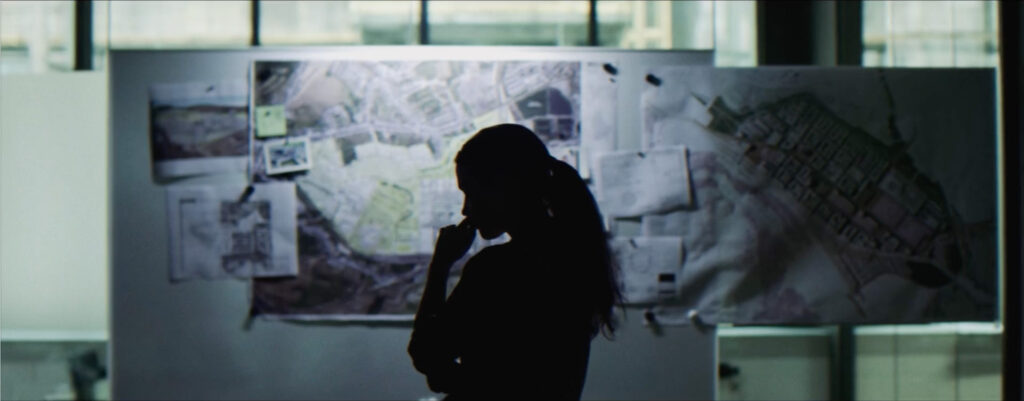
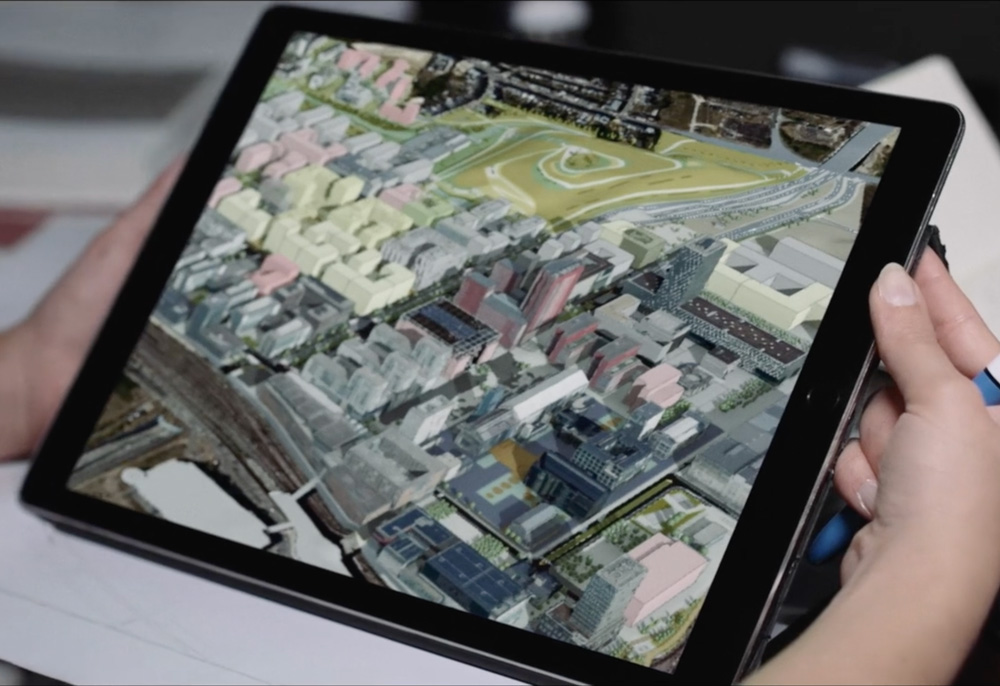
And the digital twin, what’s that? It is a virtual reproduction of the neighbourhood in its entirety, which can be explored from all angles, and in which we can run simulations and test hypotheses. It can be used to reveal models to the general public and popularise urban planning or mobility concepts. 3D visualisation of projects allows citizens to see how they will be able to use the space once the project is completed. They can also provide comments and suggestions, thus promoting citizen participation. “This is a very real possibility because the digital twin works in the same way as a video game or an augmented reality experience, in a fun and attractive way,” enthuses Michael Brobst.
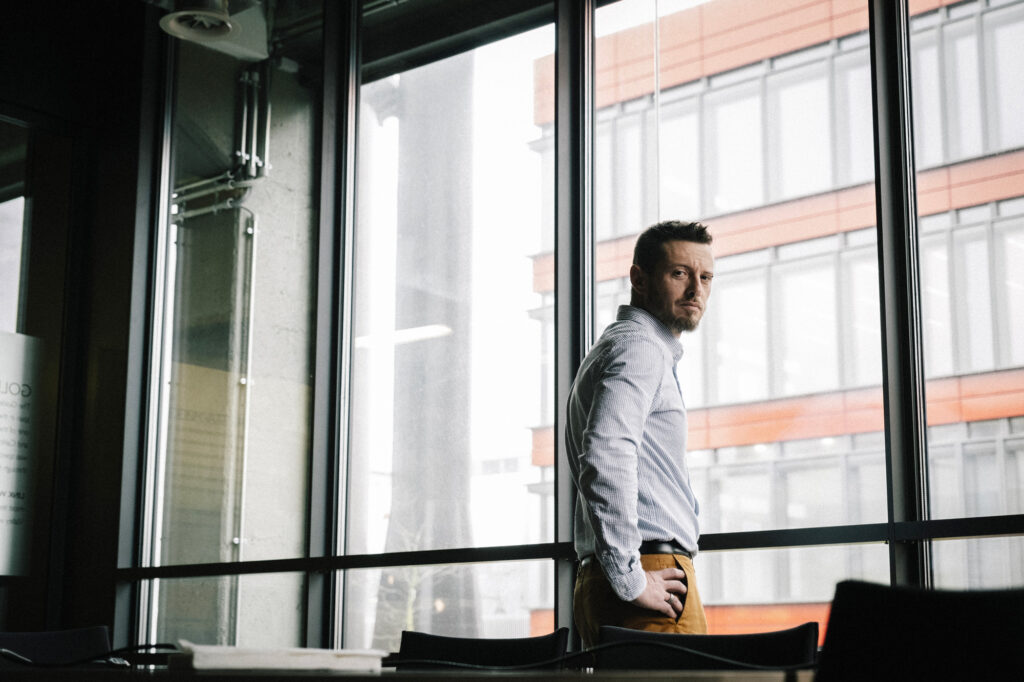
He is voluble on the subject:
“At AGORA, BIM and digital twins are intrinsically linked. BIM serves as the basis for creating digital twins, which continually evolve and are fed with data from sensors in real time. Digital twins, in turn, feed into BIM by providing information on the current status of the project. This symbiosis between BIM and digital twins improves the coordination, management and maintenance of complex urban projects, like Metzeschmelz.”
– Michael Brobst, BIM Coordinator at AGORA
A concrete example: the existing buildings of Metzeschmelz
To better understand, let’s ask Michael Brobst to show us a concrete example. He turns on his computer screen and talks about how BIM technology is useful at the very beginning of an urban development project.
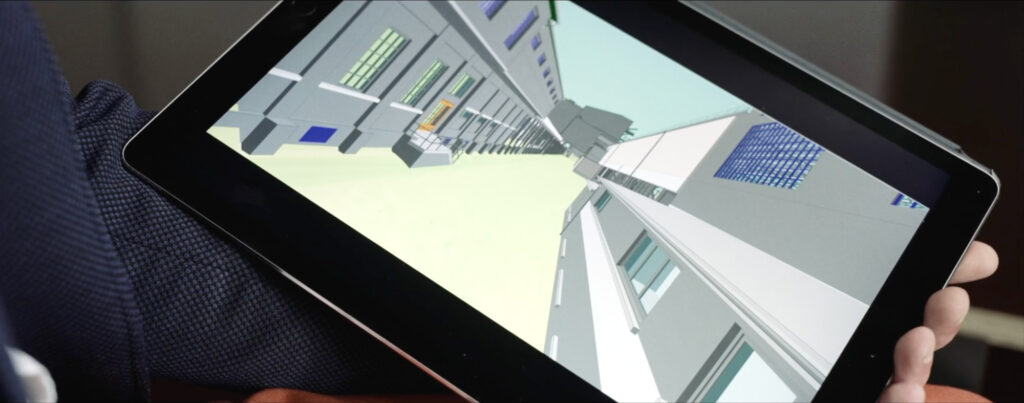
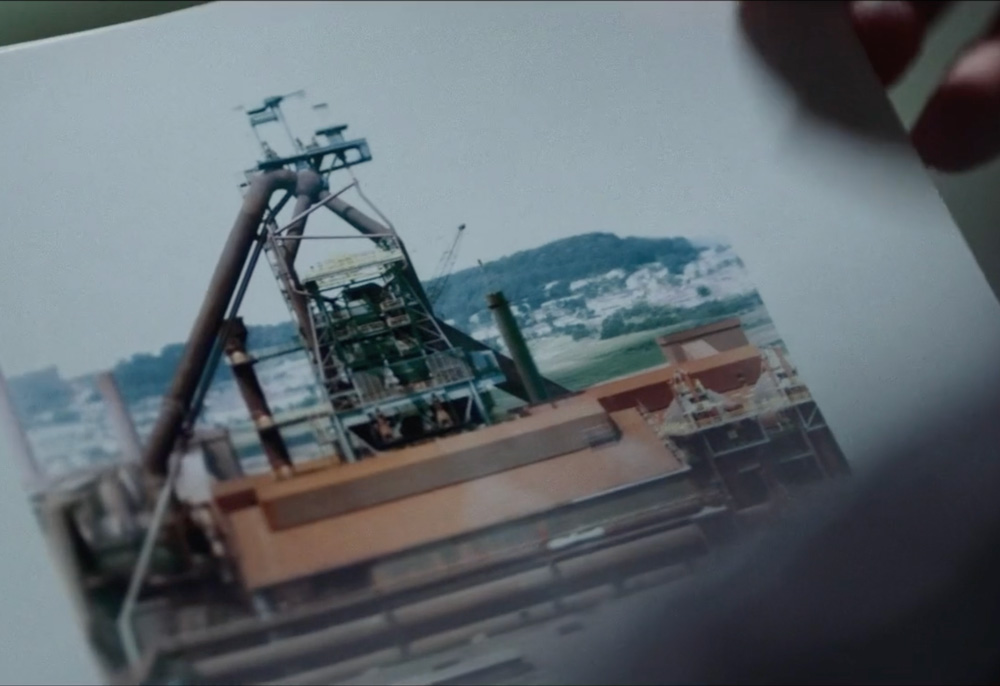
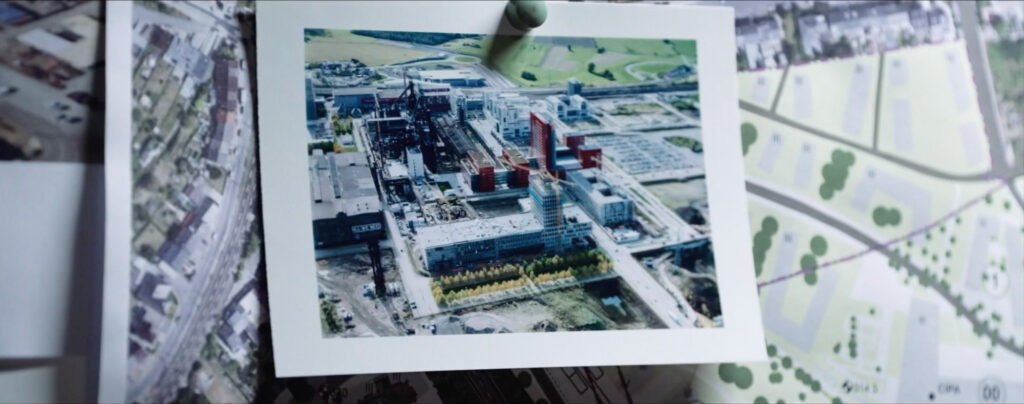
“Come, look, this is the BIM model of the buildings that remain on the abandoned ArcelorMittal industrial site which will little by little become the Metzeschmelz neighbourhood. Some buildings must be preserved for historical reasons, while others must be demolished to make way for the new neighbourhood. Here we see the buildings to be preserved, which were harmoniously integrated into the models of the final project. Modelling helps plan the deconstruction of other buildings, management of recyclable materials and risk prevention, among other things. There are many people collaborating on it at the moment. The data collected by the surveyors is transmitted to specialised companies which create the modelling on software such as Revit. For the moment, this collaboration requires direct exchanges via massive exchange platforms because there is a large volume of data, but AGORA is also working on the parallel implementation of a simpler collaborative real time platform, to facilitate data exchange between all project stakeholders in a second phase. All this integrates several features, including file synchronisation, task and error management, dashboards, performance indicators, histories, etc.”
– Michael Brobst, BIM Coordinator at AGORA
Saving time and money
It’s obvious that the use of BIM and digital twins allows for faster feedback and reduces unnecessary delays. A valuable time saver. Better communication between stakeholders reduces the risk of errors, delays and additional costs linked to coordination. “They also allow the testing of different solutions in order to choose the most suitable one in terms of performance, quality… and cost!” , adds the BIM Coordinator. BIM also facilitates the maintenance and operation of buildings throughout their life cycle by looking ahead, which also helps avoid unforeseen costs or cost overruns.
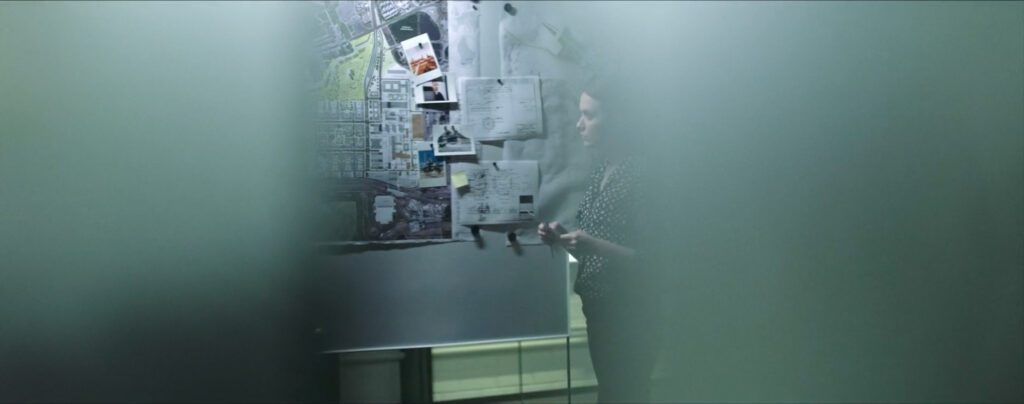
BIM also plays an essential role in preventing errors. It detects and corrects inconsistencies and conflicts between different disciplines before work begins. . It improves data quality and reliability by avoiding loss or duplication of information.
“Generally speaking, thanks to the digital twin, we improve the quality and performance of buildings and neighbourhoods, through optimisation of energy efficiency, sustainability, accessibility, comfort and security of users,” adds Michael Brobst.
Challenges and promising future prospects
“BIM technology is mature, and I see very few limits or constraints,” Michael Brobst adds assuringly. But there is a challenge: the human factor! It is necessary to dedicate the time to teach all employees how to use these tools fluidly, without it becoming an additional constraint. “It is not enough to impose them on people without showing them the benefits they can bring. This requires daily work to demonstrate that these technologies are an asset that makes everyone’s work easier,” adds the BIM Coordinator. But BIM is not so complicated. The interface can adapt to different user profiles, is very user-friendly and easy to use for a wide range of people.
“It’s also stimulating to imagine the future of AGORA’s projects as BIM and digital twins evolve. It is truly revolutionary to have such a global and integrated vision of the life cycle of a project, from its design to its operation, including its construction and maintenance. It’s an exciting new paradigm. At AGORA, we are convinced that these design tools will make cities smarter, more resilient and more human. In the case of Metzeschmelz, they will contribute to creating an intelligent, connected and environmentally friendly neighbourhood.”
– Michael Brobst, BIM Coordinator at AGORA
No doubt, BIM and digital twins are essential tools to support the ecological and social transition of cities. AGORA can no longer do without it.