Employee Housing: From an HR Challenge to a Concrete Opportunity at Belvie
Given the ongoing tensions in the housing market, the ability to secure adequate housing has become a key factor for many employees and a strategic issue for employers.
With a development dedicated to Belvie, the new neighborhood in Belval, AGORA offers businesses a concrete opportunity to turn this challenge into a project.
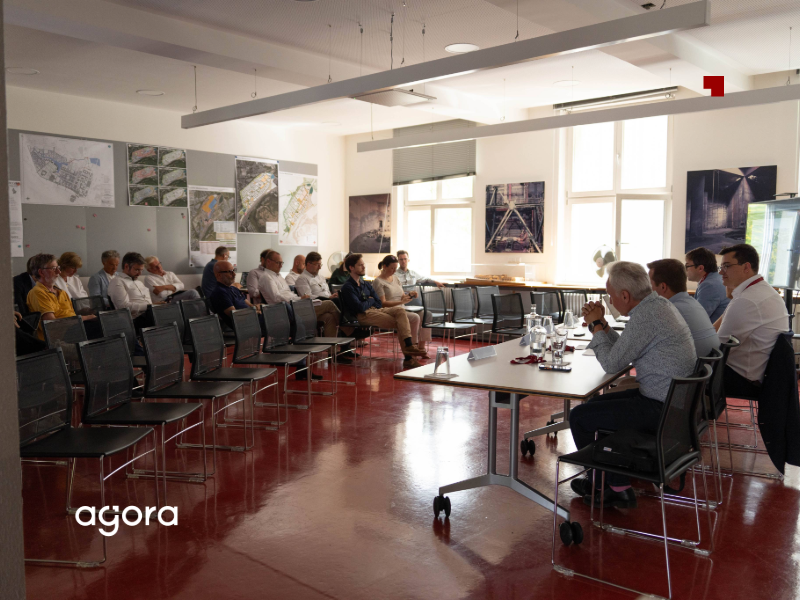
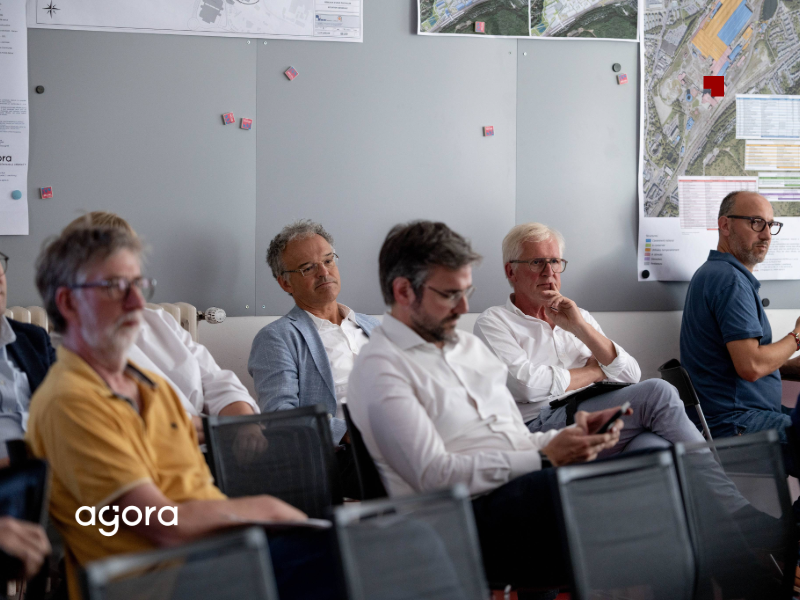
At the informational session held on July 7, 2026, attended by representatives from the Ministry of Housing and Land Use Planning, AGORA presented to employers the principles of affordable housing for employees, as well as the details of the call for expressions of interest launched in Belvie.
This program, introduced by the amended law of August 7, 2023, on affordable housing, allows affordable rental housing to be reserved for employees of a specific employer. It serves a dual purpose: to facilitate access to housing for eligible households and to provide companies with a new tool to support their recruitment, onboarding, and employee retention strategies.
Housing: A Strategic Issue for Employers
Compensation, job responsibilities, and career advancement opportunities remain at the heart of the relationship between a company and its employees. However, in a tight housing market, the ability to find suitable, affordable, and well-located housing is playing an increasingly important role in the decision to join a company or to stay with it long-term.
This issue is particularly acute for new arrivals, young workers, and certain hard-to-fill positions. It also affects employees who devote a significant portion of their time and budget to commuting between home and work.
Providing access to affordable housing is therefore not merely an added benefit. For companies facing these challenges, it can become a real driver of attractiveness, workforce stability, and regional roots. By bringing housing closer to workplaces and services, the program also helps improve employees’ quality of life and reduce unnecessary commuting.
A regulated program designed to produce housing that remains affordable over the long term
Housing for employees falls under the broader category of affordable housing. It is neither traditional company housing nor a rental unit offered at private-market rates.
Rent is calculated in accordance with the rules set forth by law, taking into account income and the composition of the household. The goal is to tailor the required payment to the household’s circumstances, within the limits established by law.
Prospective tenants must meet the eligibility requirements for affordable housing. In particular, they must:
- be of legal age;
- have the right to reside for more than three months;
- meet the income limits corresponding to their household composition;
- not hold any real property rights to another residence in Luxembourg or abroad that are prohibited by law.
In the case of housing designated for employees, the beneficiary must also be bound by an employment contract with the social housing provider, the owner, or the tenant of the affordable housing, depending on the arrangement chosen.
Allocation is considered “open” for this category of housing. It is organized by the social housing provider according to the terms defined within the project framework and can thus take into account the employer’s staffing needs, while complying with legal eligibility requirements and ensuring that the household size matches the type of housing.
Social housing developer and social housing provider: two responsibilities that need to be coordinated
The success of a project depends on a clear division of roles.
The social housing developer finances the project, acquires or commissions the construction of the housing units, and retains ownership of them. It is responsible for ensuring compliance with the specifications applicable to affordable housing, as well as for fulfilling the commitments related to public financial contributions.
The social housing provider handles rental management: tenant selection and oversight, leases, rent, utilities, maintenance, and day-to-day management of the tenant-landlord relationship.
Depending on the chosen structure and applicable legal requirements, these functions may be carried out within a single organizational framework or assigned to separate entities. This organizational structure must be planned in advance: the project involves the company’s real estate strategy, human resources, financing, and governance.
Up to 75% public funding for eligible costs
For affordable rental housing, construction subsidies may cover up to 75% of eligible costs, provided that the project complies with the specifications and cost limits set by the government. The project sponsor is responsible for financing the remaining costs, any ineligible costs, and any cost overruns.
This public involvement makes possible a real estate model that could not be evaluated based solely on the criteria of a conventional rental project. It does, however, entail long-term commitments.
For a nonprofit social housing developer, the units must remain designated as affordable housing for at least 40 years, in accordance with the agreement entered into with the government.
This period refers to the social allocation of housing, not the length of occupancy guaranteed to a specific employee. The procedures for allocation, review of applications, and management of changes in circumstances must be established in accordance with the law and the provisions of the collective bargaining agreement.
In Belvie, AGORA is turning the concept into a project
With a development dedicated to Belvie, AGORA offers employers a concrete opportunity to get involved in this initiative without having to launch a real estate project from scratch on their own.
The project involves the construction of several affordable rental units for employees, to be sold off-plan (VEFA). A company may express interest based on its needs. Multiple employers may also participate in the project, subject to the final legal, financial, and operational structure.
This development is part of a neighborhood designed to enhance the quality of daily life. Ultimately, Belvie will bring together housing, shops, local services, schools, and recreational spaces in an environment where nature plays a central role. More than half of the neighborhood’s total area will be dedicated to public and landscaped spaces.
Belvie is also adopting a “post-car” approach: parking will be consolidated into Mobility Hubs in order to free up public space for pedestrians, cyclists, and neighborhood life.
The site’s proximity to the Belval-Université train station, the bike path network, public transportation, and—eventually—the tram will further improve its accessibility.
For employees, this means being able to live in a sustainable, well-connected neighborhood close to a major job market. For employers, it means aligning HR policy, social responsibility, and a strong local presence.
Before committing, here are four questions to ask yourself
Employee housing is a long-term tool. Its effectiveness depends on the needs and strategy of each organization. Initial consideration can focus on four questions:
- What types of employees does the company want to support: new hires, current employees, or those in high-demand roles?
- How many housing units will it need in the medium and long term, and what types?
- What structure will govern the ownership, financing, and obligations of the social developer?
- Who will be responsible for rental management and the day-to-day coordination between the real estate, social, and HR aspects?
AGORA helps companies understand the real estate opportunity being offered in Belvie and facilitates communication with the relevant stakeholders to enable the development of a plan that complies with affordable housing guidelines.
Please express your interest by September 15, 2026
Employers interested in affordable housing for employees of Belvie’s Lot 15 may submit their expressions of interest through September 15, 2026.
The selected candidates will be announced on October 9, 2026, during National Housing Week.
Would you like to evaluate this opportunity in light of your company’s needs? Contact the AGORA team at jorge.teixeira@agora.lu
The information presented in this article provides a general overview of the regulations in effect as of the date of publication. The feasibility and specific terms of each project must be evaluated based on its unique structure and the applicable legal and contractual provisions.